The flywheel and the hedge
We've been talking about the hedge-and-flywheel strategy of the big vertically consolidated healthcare companies for a while now, most notably in my post from a year ago on consolidation vs. integration, and most recently in the comment I made on Jeff Goldsmith's LinkedIn post comparing Optum (part of the UnitedHealth Group conglomerate) to the truly vertically integrated Kaiser Permanente system.

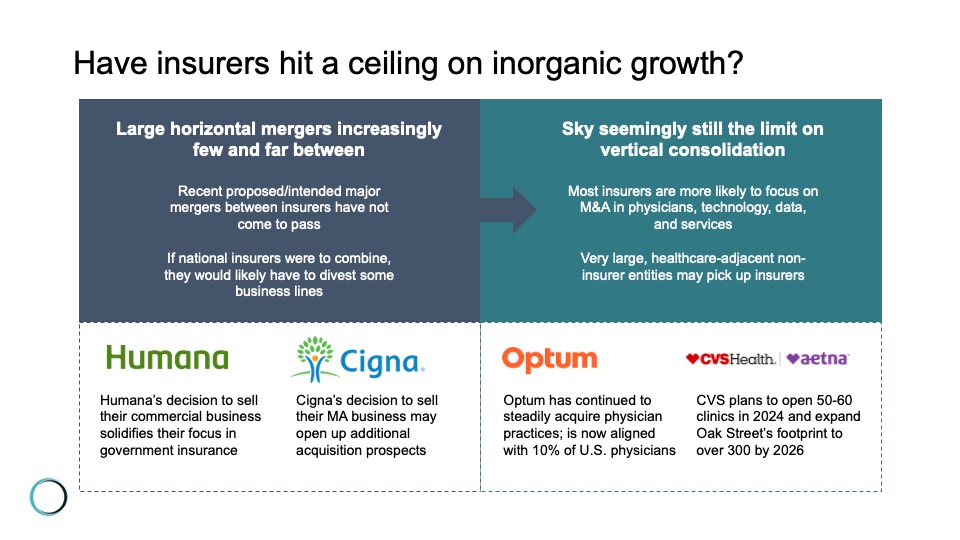
We’ve been talking about the hedge-and-flywheel strategy of the big vertically consolidated healthcare companies for a while now, most notably in my post from a year ago on consolidation vs. integration, and most recently in the comment I made on Jeff Goldsmith’s LinkedIn post comparing Optum (part of the UnitedHealth Group conglomerate) to the truly vertically integrated Kaiser Permanente system. A few people messaged me separately to ask what I meant by hedges and flywheels. How do they work? Probably worth taking a quick step back first, and (of course) grossly oversimplify things.

Union Healthcare Insight
Log in to continue reading
Not a member yet? Create a free account for limited access.

Let’s talk.
Questions? Want to learn more about what Union can do for you? We’d love to hear from you.
Related insights
The new patient financial reality

How one health system is creatively pushing back against a labor squeeze

Growth & margin: What the numbers actually show